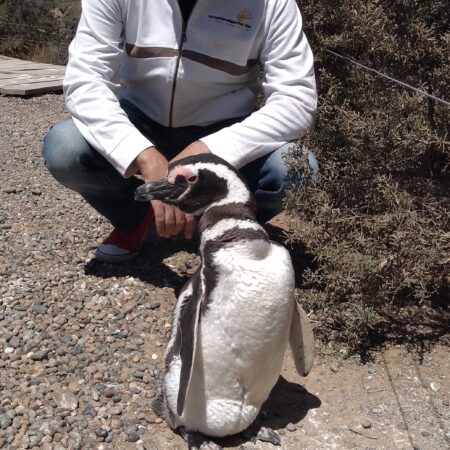


Magellanic penguins (Spheniscus magellanicus), arriving along the Patagonian coast in early spring, are true masters of oceanic navigation.
During the harsher months of the southern autumn and winter, these birds undertake a migratory journey of more than 1,860 miles northward, seeking the warmer waters of southern Brazil. With the arrival of September, they return with mathematical precision to their breeding grounds along the Argentine Atlantic littoral.
They construct their nests in coastal areas, taking advantage of native shrubs such as matasebo and duraznillo, where the clay-like or sandy soil permits the excavation of burrows sheltered from wind and sun. In the vast majority of cases, the very same pair returns year after year to precisely the same burrow left behind the previous season. Magellanic penguins exhibit marked fidelity to both their nesting territory and their mate, forging lifelong monogamous bonds.

Chick-rearing is an unhierarchical team effort: females and males share each phase of the life cycle in equal measure. Both partners clean and repair the burrow, defend the territory against intruders, take turns incubating the eggs, and venture out to sea on alternate days to fetch food for the young.
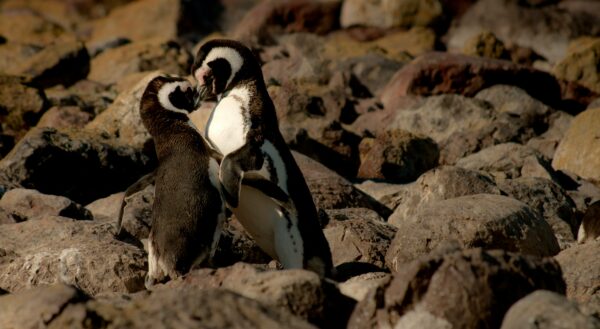
The courtship and incubation phases demand immense physical endurance. Whilst attending the clutch on land, adults seldom feed, restricting their trips to the water to brief journeys for hydration. In early October, the female typically lays two eggs. Incubation spans some 40 days of unceasing, shared vigilance.
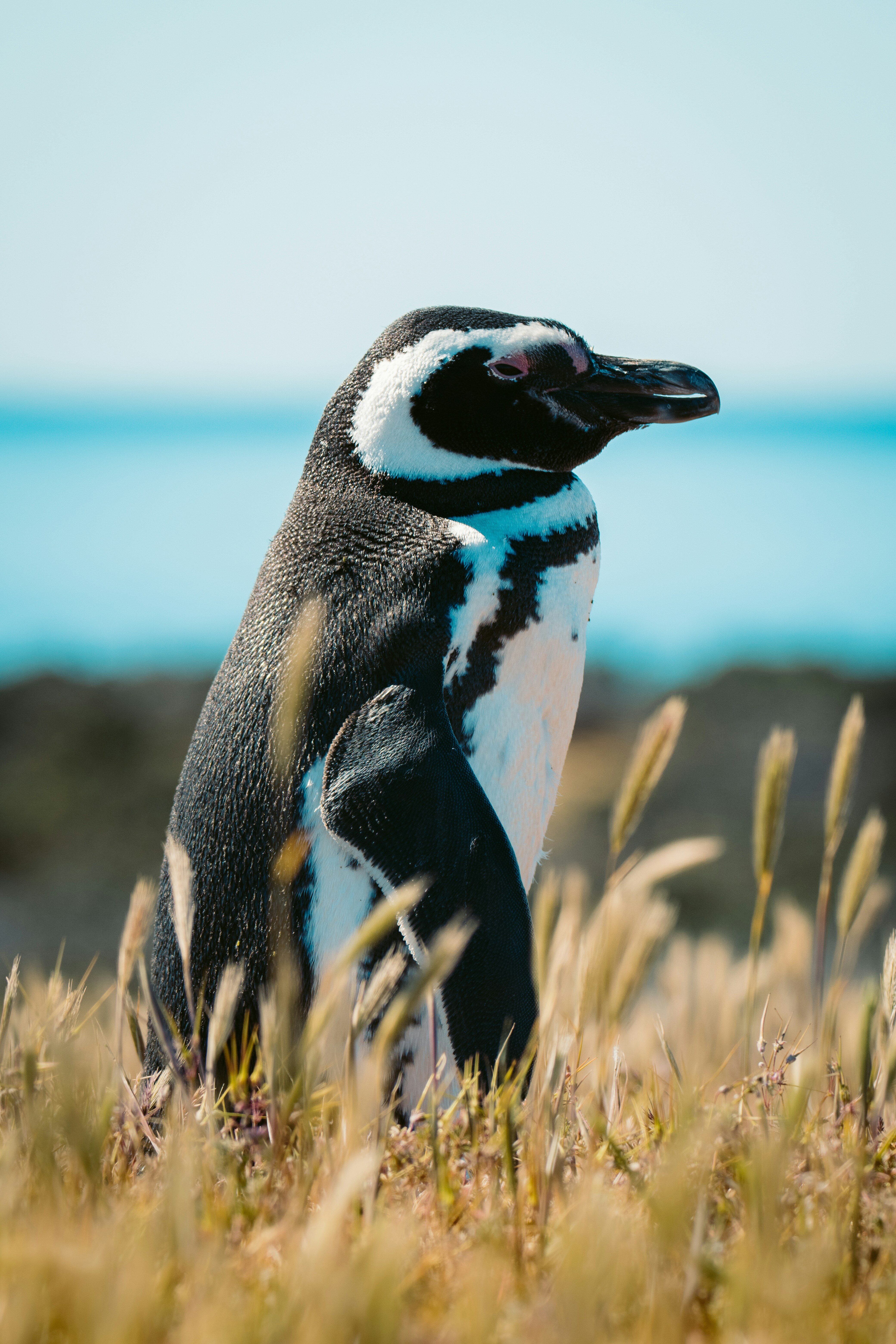
Chicks hatch throughout the month of November, swathed in a dense, soft layer of dark grey down that wards off the cold yet remains permeable to water. During their initial weeks, they depend entirely upon parental care within the safety of the nest. By February, they undergo their first moult into juvenile plumage, and only in the following year do they acquire the iconic black-and-white plumage with the twin dark bands that characterizes the adult.

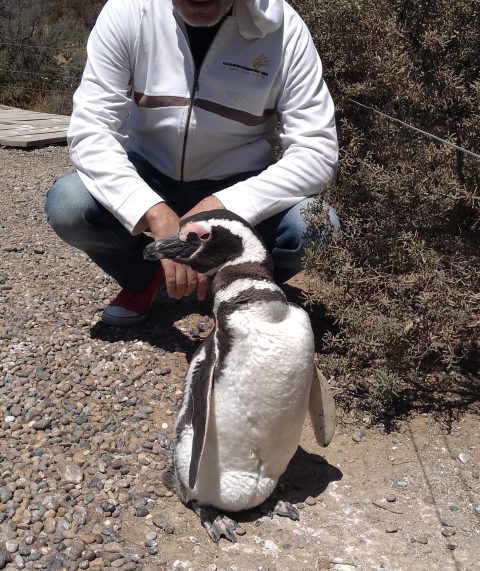
At the Magellanic penguin colony of Punta Tombo, in Chubut province, stands the world’s largest continental sanctuary for the species, gathering over half a million birds each season. Complementing this flagship reserve where visitors are allowed to literally walk among the penguins, are other vital rookeries across the region, including Estancia San Lorenzo on Península Valdés, Cabo Dos Bahías, and the Cabo Vírgenes provincial reserve in Santa Cruz.

Their diet relies chiefly upon small pelagic fish, such as Patagonian anchovy and sardines, as well as small squid. Away from dry land, the sea is their true element. They are extraordinarily agile swimmers, capable of maintaining speeds of 4.5 to 5 mph and diving well over a hundred feet deep to capture prey. For propulsion, they employ their rigid flippers like powerful oars, using their webbed feet as a rudder.

Males are perceptibly larger than females, reaching an average weight of 11 lbs in prime condition. To maintain hydrodynamic efficiency and thermal insulation against the frigid South Atlantic, they devote considerable time each day to preening. Using their beaks, they coat each feather with an oily secretion from the uropygial gland at the base of the tail, ensuring a thoroughly waterproof seal.

In their natural environment, penguins face predation from killer whales and sea lions in the water, whilst giant petrels and gulls target unattended eggs and chicks on land. However, the gravest threats to their survival stem from human activity.
Bycatch in commercial fishing nets and climate-induced shifts in fish shoals force adults to swim ever-greater distances for food, directly impairing chick survival rates.
Added to this is the catastrophic risk of marine oil pollution; oil fouling destroys the insulating barrier of the plumage, preventing the bird from swimming in cold waters and forcing it ashore to die of hypothermia, starvation, and toxic ingestion.
The enduring survival of these colonies hinges on balancing the protection of terrestrial sanctuaries with the safeguarding of their offshore feeding grounds. Only thus will the Patagonian coast continue to welcome, year after year, one of the South Atlantic’s most extraordinary migratory spectacles.