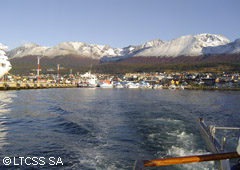
Ushuaia, the southernmost city in the World
In
order to organize your trip to the end of the world, this special
report on Tierra del Fuego will help you have a clear idea of the
attractions, lodging facilities and how to get to this place. Fares,
distances and weather in Ushuaia complete this comprehensive article.
The Argentine part of the area is Isla Grande de Tierra
del Fuego. Its geography is divided by the Andes Mountain Range,
which runs almost equal in two perfectly defined regions; it features
in the north area a plain scenery and has Rio
Grande as the most important town. To the south the mountains
reign with their valleys that get into the ocean: here you will
find Ushuaia.
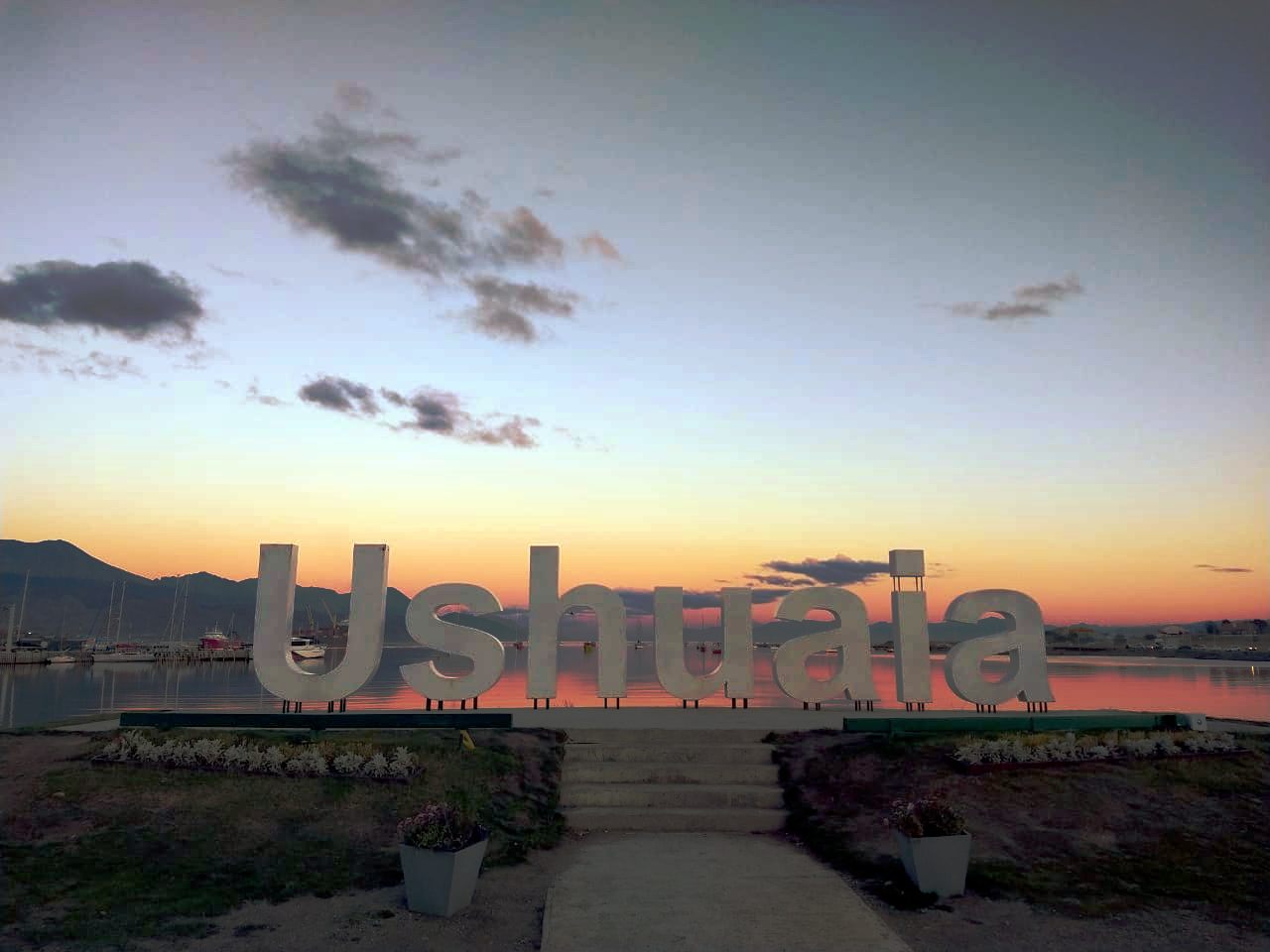
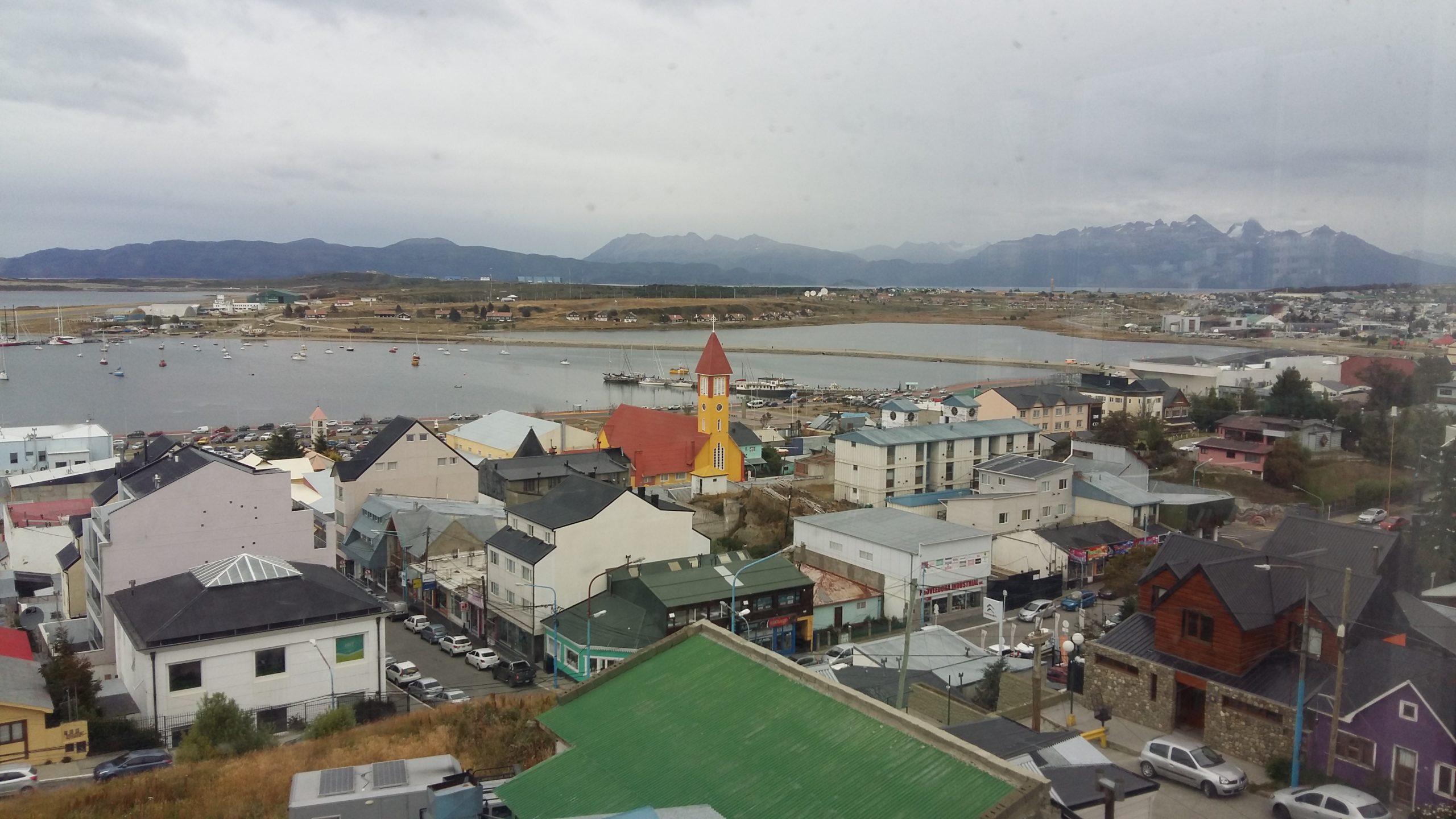
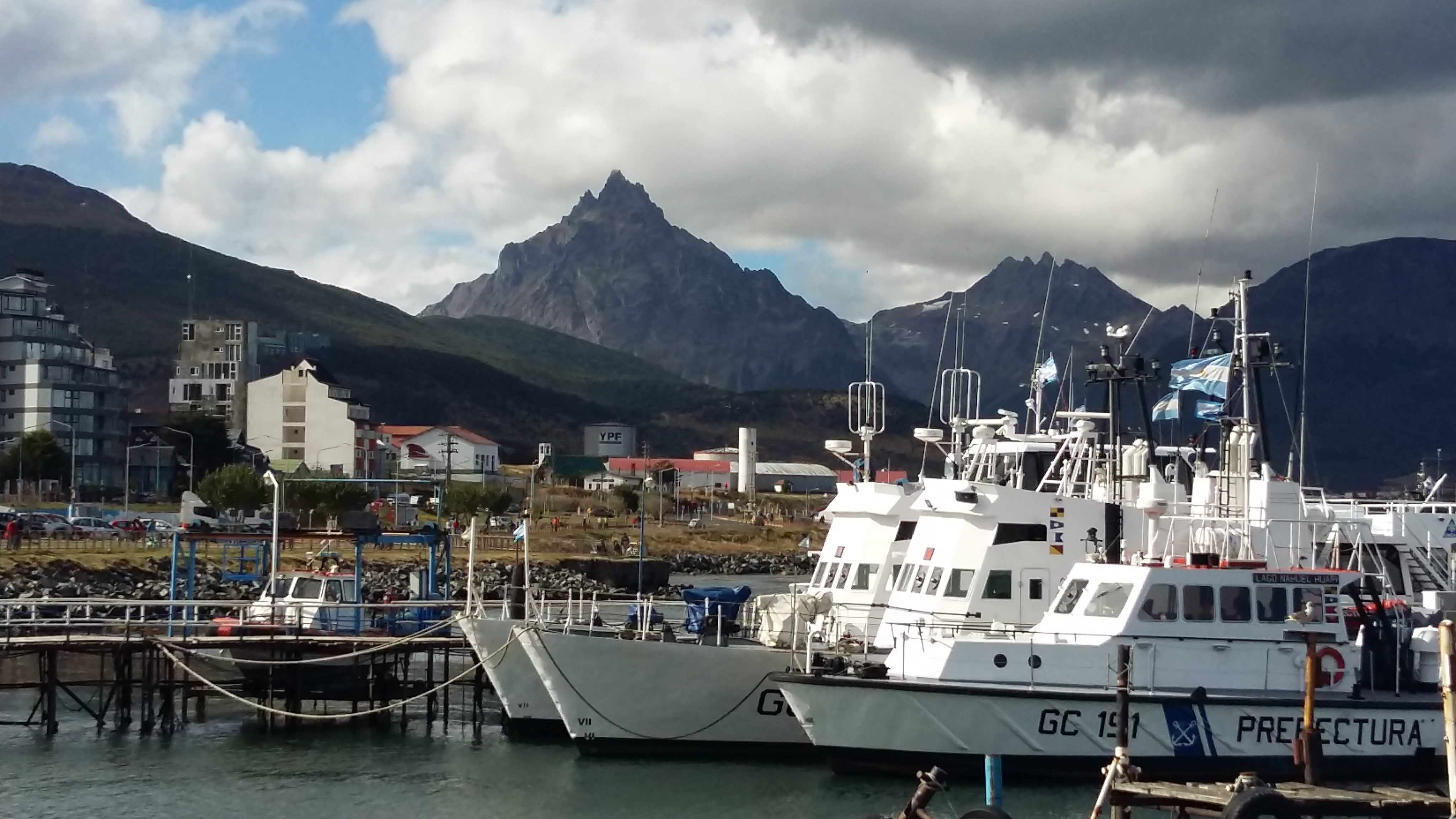
Ushuaia
is the southernmost city in the world, on the shores of the Beagle
Channel and surrounded by the Martial Mounts. It is the capital
of the Tierra del Fuego, Antarctica and Southern Atlantic Islands
Province, and its superlative location allows you to enjoy sea,
mountains and forests at the same time. Besides, it is a great
place for shopping: the whole island is a tax free zone, thus you
can find lots of imported goods along with regional products.
See our exclusive Tours to this unique place; click
here to enter our Travel Agency, get personalized
advice and book your trip through expert consultants.
English, Italian and Spanish spoken. |
Sightseeing and Activities
It
is possible to enjoy all year long this city's magic.
Summer is ideal for adventure tourism: you can go trekking,
horseback riding or even mountain biking inside Tierra
del Fuego National Park. It is also fishing
season. You can even take amazing trips across the Beagle Channel,
Cape Horn up to Argentine Antarctica.
The Tierra del Fuego
National Park constitutes an attraction itself, giving you the
chance of discovering natural beauties like Lakes
Escondido and Fagnano, as well as the
Martial Glacier.
And, should you wish to grasp the character and spirit of this
uttermost land's pioneers, there is nothing like a visit to
one of the typical Patagonian estancias,
like Harberton.
Not
very far you can get to the picturesque town of Tolhuin,
which can be visited along with Lakes Chepelmut and Yehuin.
During any of these excursions you will be able to observe this
unexplored piece of Earth's autochthonous flora and fauna.
A longer (but very interesting) journey will take you to the northern
part of the island to visit thesecond largest city, where most of the oil companies as well as cattle raisers are based: Río
Grande.
Winter
and its snowy landscapes change Ushuaia's physiognomy radically.
Only 15 Km. from the city you have the Mount Castor Ski Resort,
on Krund Hill. And if skiing
is the name of the game, Ushuaia's possibilities are almost endless.
A walk around town
The
city tour can begin along the Coastal Avenue (Maipu), which borders
the Beagle Channel. Along this avenue you will get to the Port of
Ushuaia and the Nautical Club. At the end there is a catwalk that
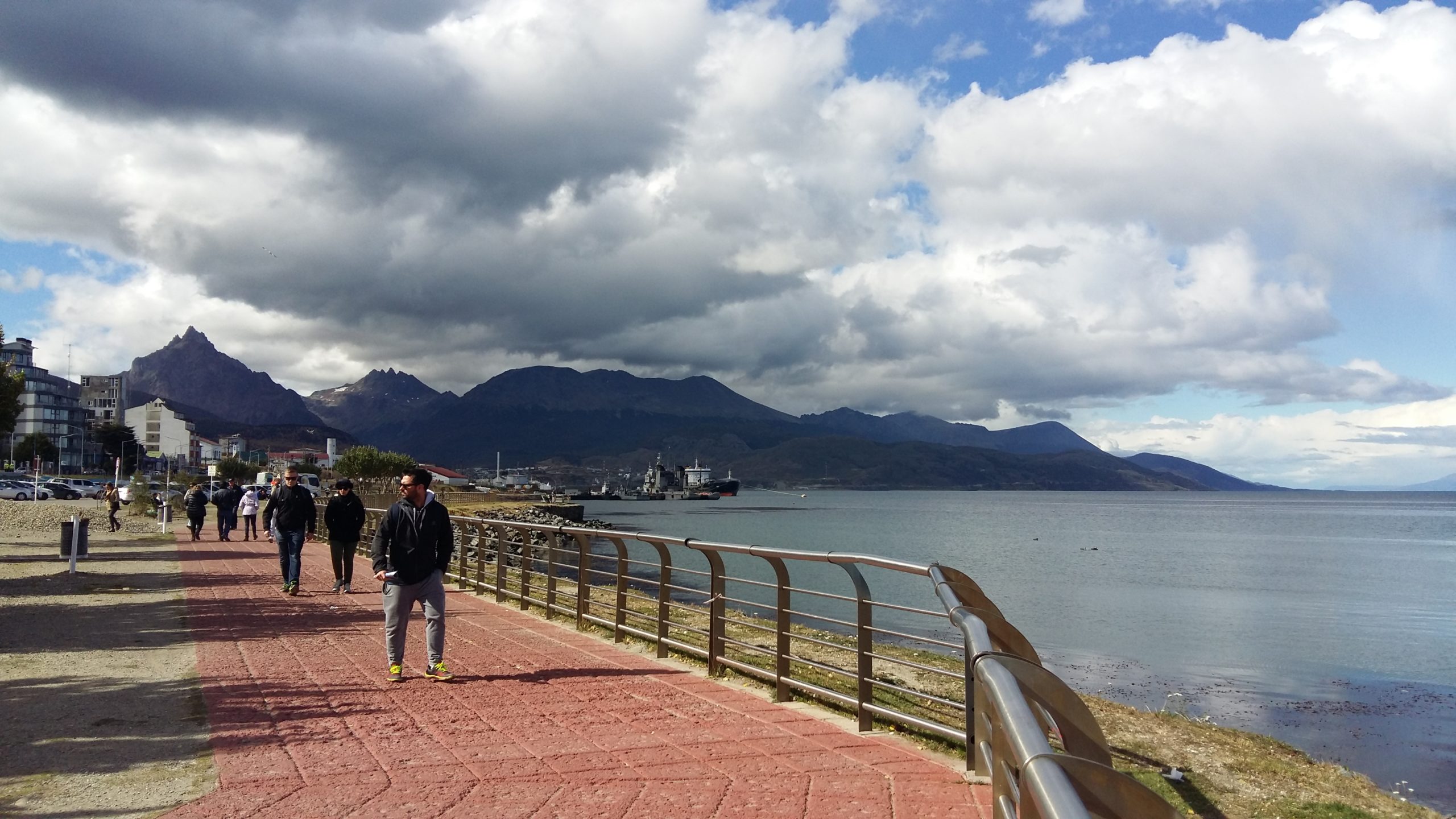
you must take in order to get to the peninsula where magnificent
views of the city are guaranteed. This area shelters Bahía
Encerrada, which gets frozen during winter and becomes a Skating
rink.
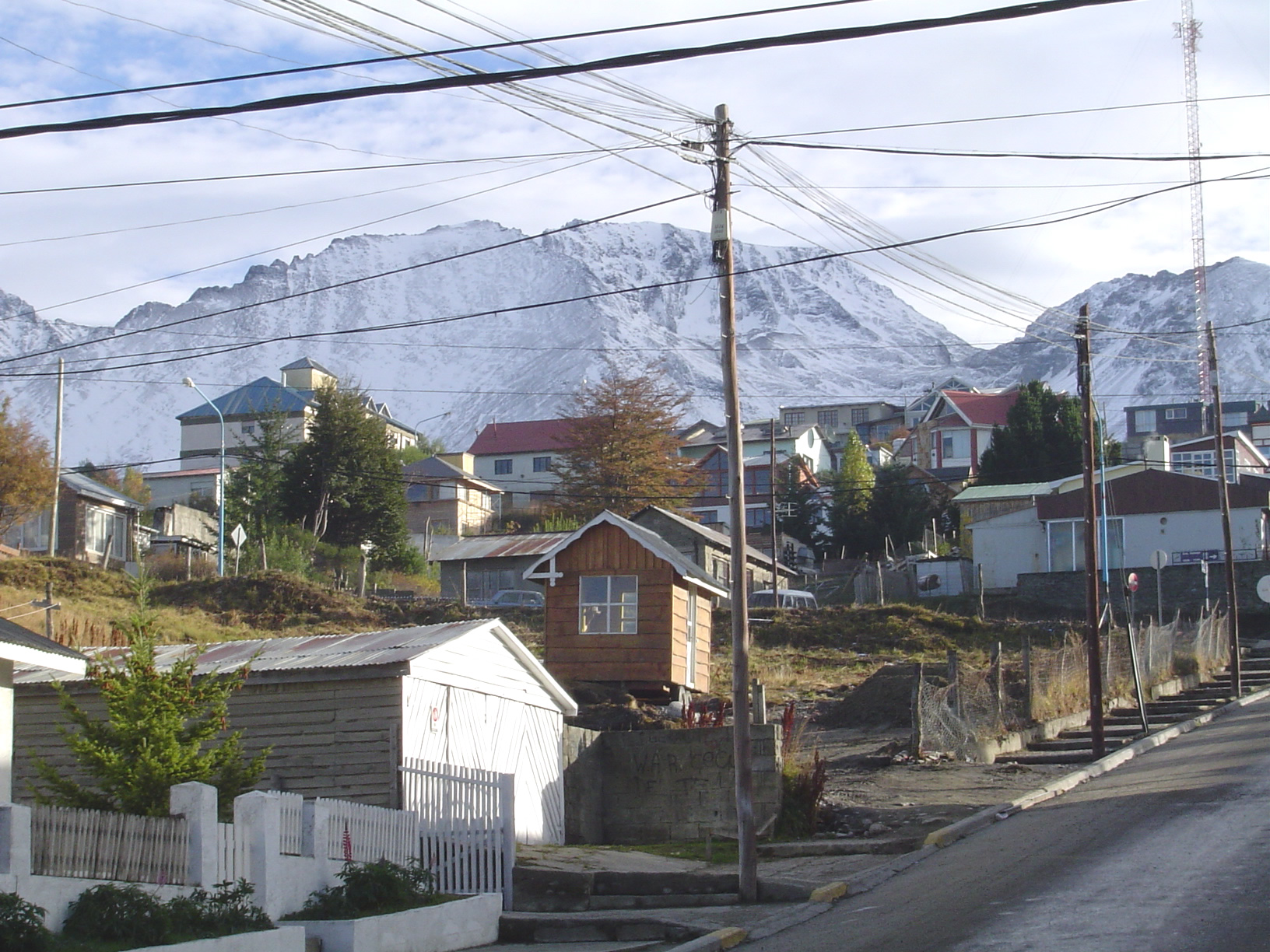
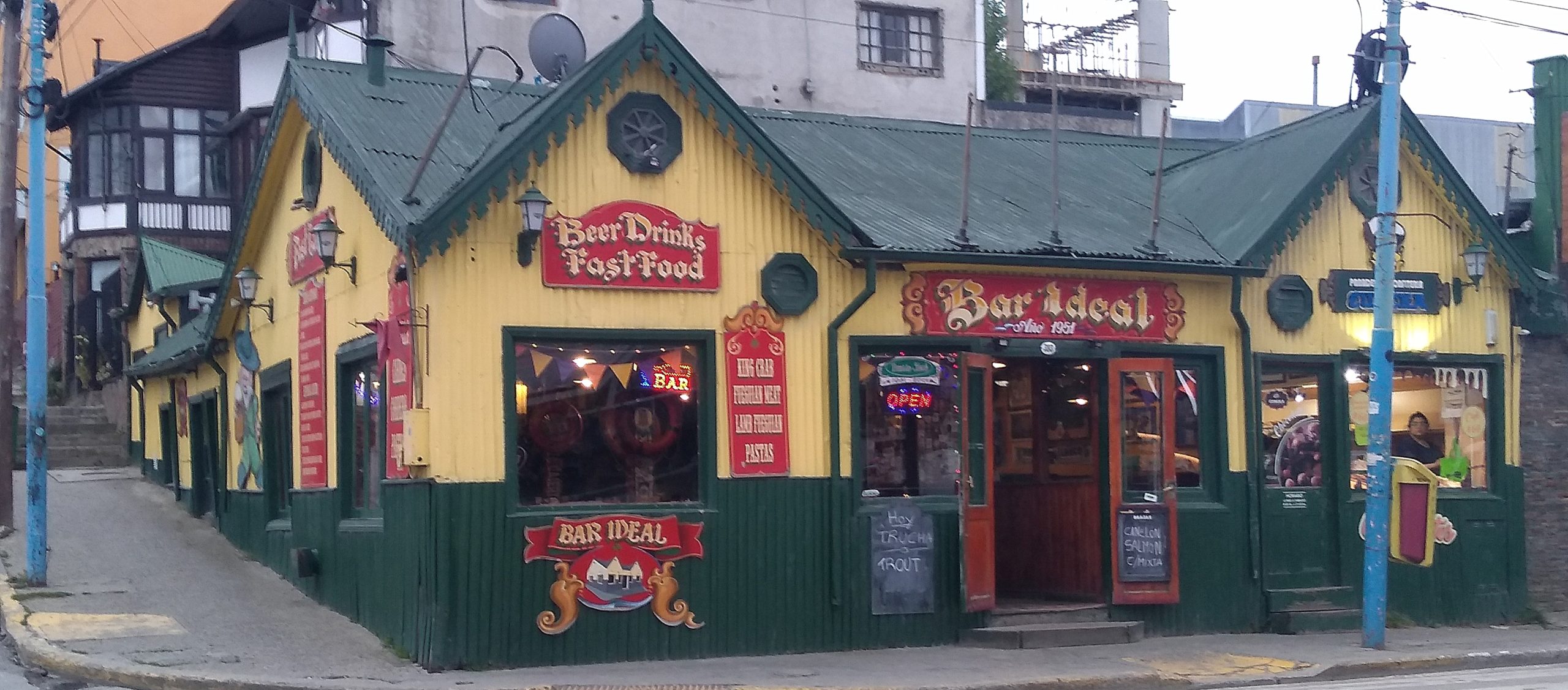
Later, on your way back to downtown along Malvinas Argentinas street,
you will see the historical Beban House and the reconstruction of
the old town, a relic that recreates Ushuaia during the days of
the pioneers.
On the opposite extreme of the city, if going along the main street
(San Martin) up to its crossing with Yaganes St. you will reach
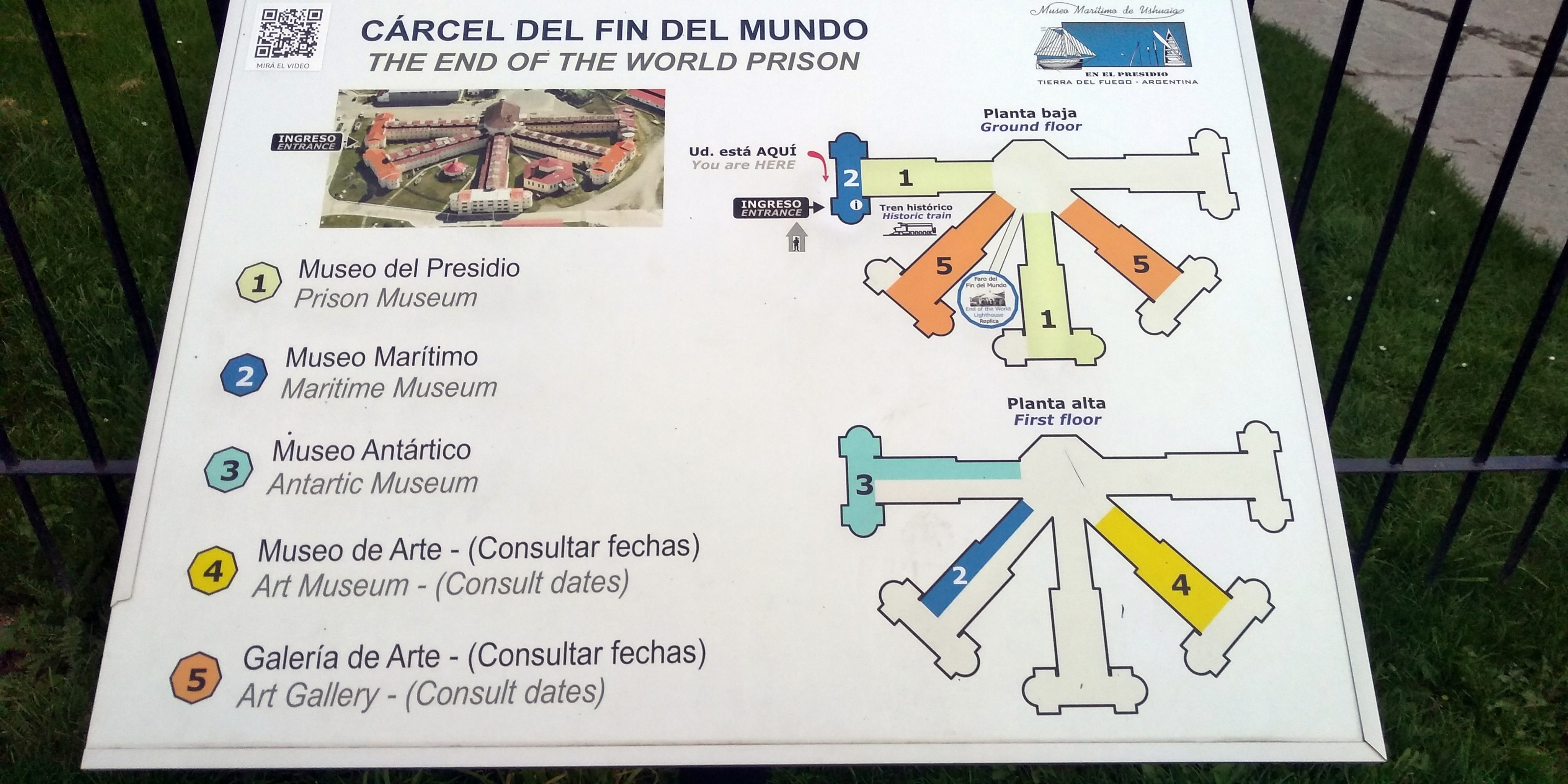
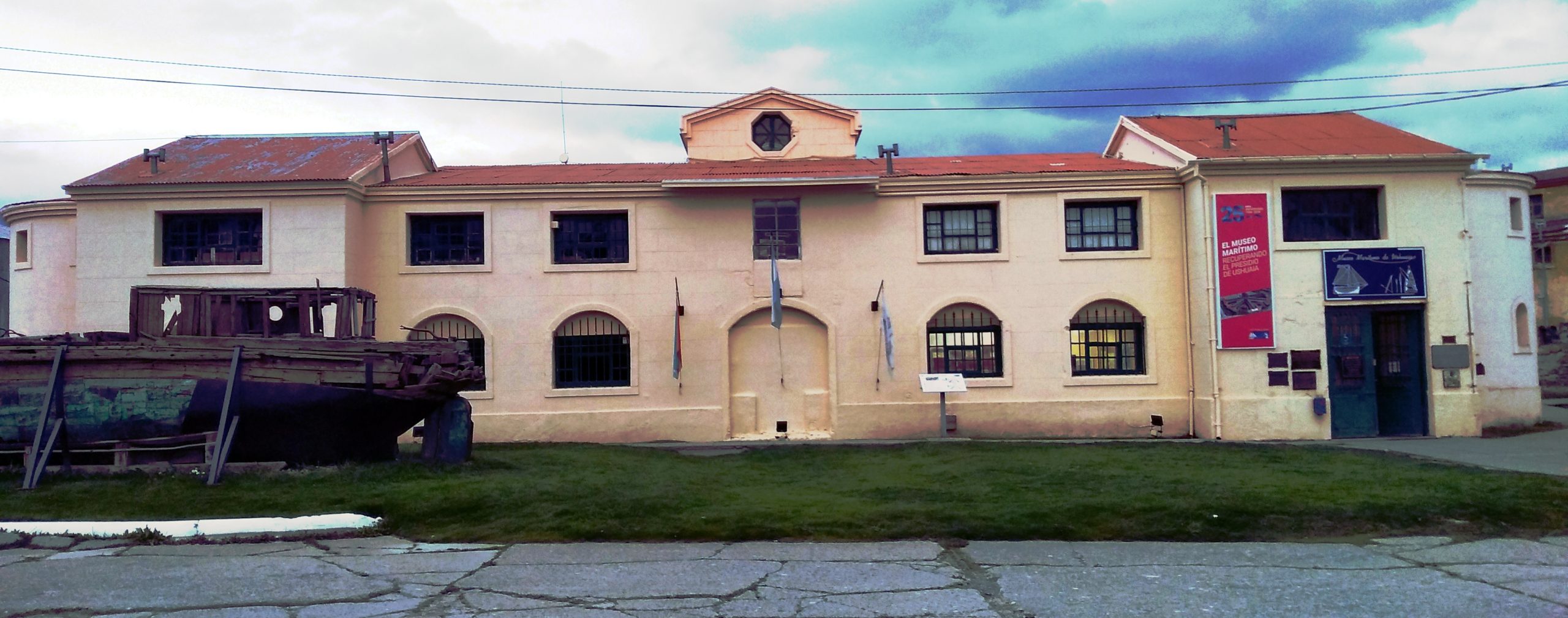
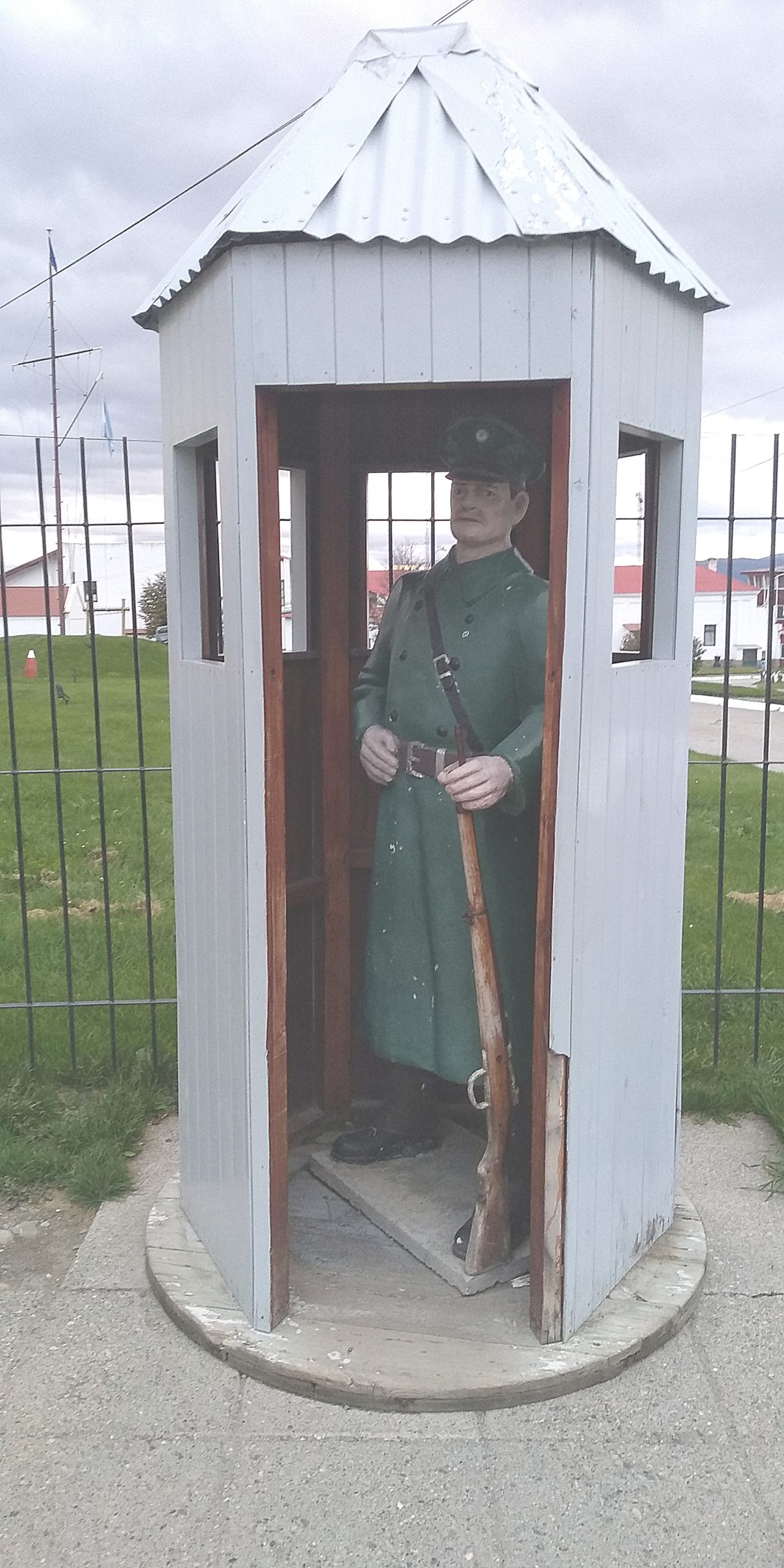
the legendary Jail of the end of the world, now transformed into
a museum (Museo del Presidio). A must visit, where there are even
wax statues of the most famous criminals that were sent to that
place.
Some words about the jail
This
historical prison was shut down in 1947. Nowadays most of it
still stands conserving its original state, with the cells used
by the convicted, their stone walls and the bars and grids.
This jail is the symbol of Ushuaia's colonization. It began
to be built in 1902 and was finished in 1920. The works were carried
out by the prisoners themselves, and had 380 one-person cells.
The main reason for its existence was to lodge re-offenders, but
it ended up with a mixture of the most dangerous criminals, thieves,
political prisoners, members of the armed forces, etc.
Those
prisoners with good behavior were rewarded with the chance of working
outside the jail, or in the workshops. This was paid work, fact
that enabled some of them to save some money for the moment they
were released or to send it to their relatives outside. Among the
workshops there were: press, photography, shoe repair, tailor, carpentry,
bakery, medical service, pharmacy and so on, all of which gave Ushuaia's
inhabitants the basic supplies in order to live. Otherwise they
would depend on ships arriving to the port only once a month, or
even less.
In this way Ushuaia's life was being built around this prison and
along with it.
Nowadays it has become a museum: "Museo Marítimo
y ex presidio de Ushuaia". The central hall is used as
a lecture room, movie theater and venue for different events. From
there, you access the cell areas. One of them, called Ala Histórica,
remains intact and will thrill you with its mysterious and dark
atmosphere. Many cells keep memorabilia from the last prisoners
that lived in them. Then there is another area, the Pabellón
4, where there is a Marine Museum showing Tierra del Fuego's past
right from the days of those
first explorers that came from Europe.
The train of the End of the World
It is another of Ushuaia's attractions. It's true name is "Ferrocarril
Austral Fueguino", a.k.a. the Train of the End of the World
which, along with the jail, constitutes an icon of the island.
This railway's history is, as almost everything in this city,
linked to the prisoners of the mythical jail.
An elegant and antique formation of heated wagons, with wide windows
and pulled by a steam locomotive, will take you along a 8 Km. long
tour departing from the End of World Station up to the Tierra del
Fuego National Park Station. The round trip total time is 1 hour
40 minutes, approximate.
Most of the way you will go bordering River Pipo. This will allow
you to see a reconstruction of a yámana settlement (aborigines
of the region), while you enter a dense and beautiful wood of cohiues
and lengas, meaning that you are already inside the National Park.
The "Les Éclaireurs" Headlight
Another
typical landscape of Ushuaia, this headlight is located in one of
the many promontories that populate the Beagle Channel, in front
ofthe city. It is mistakenly called the Headlight of the End
of the World, name that Julius Verne used for the San Juan de Salvamento
headlight, at Isla de los Estados.
This headlight is a tower painted in red and white stripes, 11
meters tall, and is equipped with a solar energy based lighting
device.
See our exclusive Tours to this unique place; click
here to enter our Travel Agency, get personalized
advice and book your trip through expert consultants. English, Italian and Spanish spoken. |
How to get there?
Since it's an island most travelers arrive in Tierra del
Fuego by plane. There are direct flights from Buenos Aires City
to Ushuaia. There are also regular flights that connect
with El Calafate
(gateway to the Glaciers National Park)
By your own vehicle
If you want to get here by land you must take a ferry and cross
through Chilean territory.
There are two crossings:
By Primera Angostura (Punta Delgada-Bahia Azul). The ferry takes
30 minutes and runs every hour from 8.30 am to 10,15 PM. This is the most used crossing every year. This schedule is for the summer season only.It does not
operate under bad weather conditions.
The second crossing is Punta
Arenas-Puerto Porvenir. It takes 2 hours and a half. The schedule:
Tuesdays to Saturday 9 am, and Sundays 9.30 Am. It returns every Tuesday, Wednesday, Thursday and Saturday at 2 pm. Fridays at 3.30 pm and Sundays at 5 pm. Once again, this schedule is for the summer season only.
It is advisable to have reservations made for this second crossing.
Reservation phone number in Punta Arenas: 00-56-61-218100.
By bus:
There is no way to get directly by land from Buenos Aires. You must go first to Río Gallegos, there are many companies that offer this service, the travel lasts about 36 hours (there are 2570 km. between both cities).
Once there you have to take another bus in order to make the trip between Río Gallegos and Ushuaia, which includes the crossing of the Strait of Magellan. The company that makes this trip is called Tecni Austral. You must take notice that you will pass through Chilean territory so you will have to go through customs. The trip lasts between 8 and 10 hrs.
There are not direct services between El Calafate and Ushuaia either. There are two options:
a) Via Río Gallegos: There are several daily frequencies between Río Gallegos and El Calafate, there are 300 km. of paved road and the trip lasts about 3 hrs.
b) Via Chile: If you choose this option the trip will be: Puerto Natales-Punta Arenas-Ushuaia, and you must take three different buses. The first part of the trip lasts 5 hrs., there is not a long distance, but you must consider the time needed to go through customs. For the second part of this trip there are buses departing every hour since 8 am to 8 pm. Finally, the trip between Punta Arenas and Ushuaia, which includes the crossing of the Strait of Magellan, is made only by the company Tecni Austral and it takes about 10 hrs.
Distances in kilometers from Ushuaia:
Río Gallegos 594 (1) 733 (2) *
Punta Arenas 831 (1) 1010 (2) *
El Calafate 914 (1) 1053 (2) *
Río Grande 230
*(1) Cruce Primera Angostura *(2) Cruce Puerto Porvenir
Buenos Aires 3194
Puerto Madryn 1799
Neuquén 2676
Córdoba 3199
Bariloche 2178
See our exclusive Tours to this unique place; click
here to enter our Travel Agency, get personalized
advice and book your trip through expert consultants. English, Italian and Spanish spoken. |
Useful Information to visit Ushuaia
Ushuaia
is the main tourist center of the Island and one of the most visited
spots in Argentina.
You will find lodging options with different rates and categories,
from five stars hotels to cottages, shelters, rental houses and
even campsites, which are only available in summer season because
of the
weather
conditions. Consult our database in order to obtain full information
about your possibilities.
Excursions and visits in Ushuaia
There are two museims that are a "must" in Ushuaia: The End of the World Museum Maipú Avenue and Rivadavia street) and the Maritime Museum (In Yaganas street and Gobernador Paz street), whose building was the former jail of the city. The are special rates for children under the age of 14
years and also for groups, students and retired people.
It is also recommendable to go to the Paseo Centenario (San
Martín y Gobernador Paz), that offers an incredible panoramic view.
Tours in the area
*Tierra del Fuego
National Park (4 hours)
*Lakes Escondido and
Fagnano (7 hours)
optional: lunch without beverages in the area of Valles invernales
*Martial Glacier
(2 hours)
*Short Sea Tour (Lobos
Island, Birds Island and Les Eclaireurs) (3 hours)
*Pingüinera (penguin rookery) (5 hours)
*Penguin rookery
and Estancia Harberton (7 hours)
*Puerto Williams (Chile) (10 hours)
Non traditional activities
*horseback riding (2 hours)
*countryside tourism (2 hours)
*Trekking: (minimum 2 people)
*Parque Nacional Tierra del Fuego
*Lago Escondido and Fagnano
*beaver watching
*Wind sailing
*Bahía de Ushuaia (4 hours)
*Archipiélago Bridges and Les Eclaireurs (7 hours)
*Canoe sailing (minimum 2 people)
*Diving in Beagle Channel (2 hours)
*Fishing tour (1 day)
Food
The average price for a complete meal in Ushuaia is $17 without
beverages. There also are fast food or "eat as much as you
can" restaurants with menus of $10.
Average Temperatures
December to February: 6°C to 10°C (nights), 8°C
to 18°C (days).
March to May: 0°C to 6°C (nights), 5°C to 10°C
(days).
June to August: -8°C to-15°C (nights), -2°C
to 3°C (days).
October to November, 2°C to 7°C (nights), 4°C
to 11°C (days).
At Ushuaia you can expect southwestern winds, with an average speed
of 20km/h.
Suitable clothing
It is mandatory to always pack winter clothes. So that you
get an idea, heating systems are on all year long (summer included)
in Ushuaia. Nights are always low in temperature. Also remember
to take an extra pair of socks when going out on excursions, you
might need to change the ones you wear.
As for footgear, the best is boots or shoes with rubber
soles, trekking style. Avoid common sneakers.
If it is winter, do not forget your scarf, skiing type gloves
and winter caps. However, you should also wear light clothing underneath
because all the closed spaces are very well heated.
Finally, always carry solar protectors because the sun,
the wind and the snow altogether may produce an overexposure.
See Also: Patagonia's Lighthouses - Tierra del Fuego National Park - Ephemeral Art at the End of the World
See our exclusive Tours to this unique place; click
here to enter our Travel Agency, get personalized
advice and book your trip through expert consultants. English, Italian and Spanish spoken. |
|