Patagonia Argentina, September 2, 2010

Flora and Fauna in Iguazú Falls

The Flora

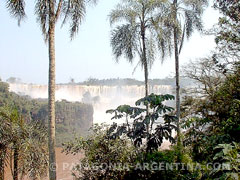
The main characteristic of the flora is that there are multiple layers of it, one on top of another, from the forest floor to the canopy of the highest trees. Not only do the tops of the trees touch, but more plants hang from their branches, making it impossible to see the blue of the sky in some places.

One of the more typical species of the Park is “Palo Rosa” (pink stick) which grows more than 40 meters high, dwarfing even the trees. It is named for the color of its wood, which is even more pronounced when it is recently cut. Due to its declining numbers it has been proclaimed National Monument.

This giants live side-by-side with another more common species, the palm tree, which grows in groups. The internal trunk of this plant is edible and very tasty, but its extraction causes the tree to die, which is putting the species in danger of extinction.

Other common plants are orchids, the “guatambú”, the “pindó” and other hanging species. And don’t forget about the ceibo, a tree whose red blossoms are the national flower of Argentina.

The Fauna

The attentive visitor will have the opportunity to observe many distinctive creatures in their natural habitat.

Many mammals live only in defined areas of the jungle: they are tree dwellers and live in communities. One of the more interesting adaptations of the tree dwellers is a tail that is capable of grasping, so it functions as a fifth hand. If you look towards the canopy when you are walking on the Macuco Path, you will see monkeys moving through it with such grace that they appear to be dancing. Other animals that share this characteristic are the oso melero, the weasels, the zarigüeyas and the coendú, which is a rodent covered in spines.

Coatí, Iguazú FallsThe coaties, with their ringed tails are a common sight for visitors in the park who walk the trails. They always travel and rest in groups, delighting kids and playing with them.

The cats, agile, silent, and astute hunters, are another wonder of the park. The most important is the yaguareté, and was declared a National Natural Monument in 2001. They hunt a wide variety of prey, including large mammals. Other cats to watch out for is the smaller but equally deadly puma, the ocelote and the yaguarundí.

There is another natural show to catch. The butterflies are enormous, with brilliant colors and strange forms. It’s a natural design show!

There are more than 400 species of birds, including many types of parrots and toucans. But the most common are called “vencejos de cascada” which build their nests in the rocks behind the falls.

When viewing the fish, keep in mind that the waterfalls have constructed a natural barrier between the upper and lower rivers, allowing the fish to evolve separately.

In the lower river you will find the Surubí, the Pacú, the Sábalo and the famous Piranha, while in the upper river you will find the Chanchitas, Tarariras, Dientudos and Moncholos.


Share this article!


Publicidad

El contenido de esta página requiere una versión más reciente de Adobe Flash Player.

Obtener Adobe Flash Player