

The Formation of the Iguazú Falls, revealed.
The Iguazú River is born in Brazil, in the Serra do Mar of Paraná state. It meanders gently across many miles of plains in a southwesterly direction until, nearing its confluence with the Paraná River, it takes a sharp bend. There, its course is interrupted by numerous islands and islets that create turbulent rapids, quickening its pace and splintering the river into countless diverging branches.
This dense Paranaense rainforest, painting the landscape in a deep emerald that contrasts sharply with the province’s vibrant red earth, acts as a masterful prelude. Here, the air begins to feel thick and perfumed, heavy with a feverish humidity that tips off the senses: we are about to witness nature in its rawest, most unbridled form.
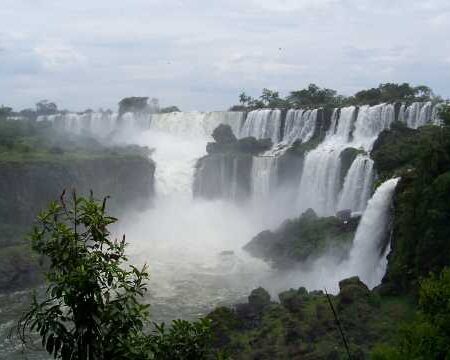
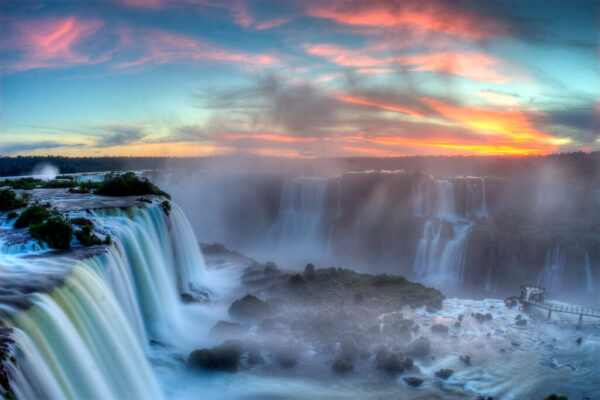
Shortly before emptying into the Paraná, the river encounters a massive drop, a jagged rift born of a geological fault that occurred hundreds of thousands of years ago in the Brasília Massif. This fracture, combined with the aforementioned splintering of the riverbed, gives rise to a gigantic system of waterfalls, composed of more than 270 individual cascades arranged in a crescent, plunging from heights of 130 to nearly 300 feet.
Where Are They Located?
A compelling curiosity: it is known that when they first formed around 200,000 years ago, the falls were located exactly at the confluence of the Paraná and Iguazú rivers—where the Triple Frontier landmark between Argentina, Paraguay, and Brazil sits today. However, through a relentless process of natural erosion, they have retreated to their current position, about 14 miles upstream from their origin. Geologists estimate this slow retreat is still underway.
Beyond the cold, rational geological explanation, Guaraní aborigines’ oral tradition whispers a different truth about the scar of this natural wonder. Legend has it that the irascible serpent god M’Boi, enraged upon seeing the beautiful maiden Naipí fleeing in a canoe with her lover, the warrior Tarobá, sliced the riverbed in two to condemn them for eternity. Today, the untamable roar of the waters is, to locals, the constant echo of that tragic romance immortalized in basaltic rock.
Which Are the Most Important Falls?
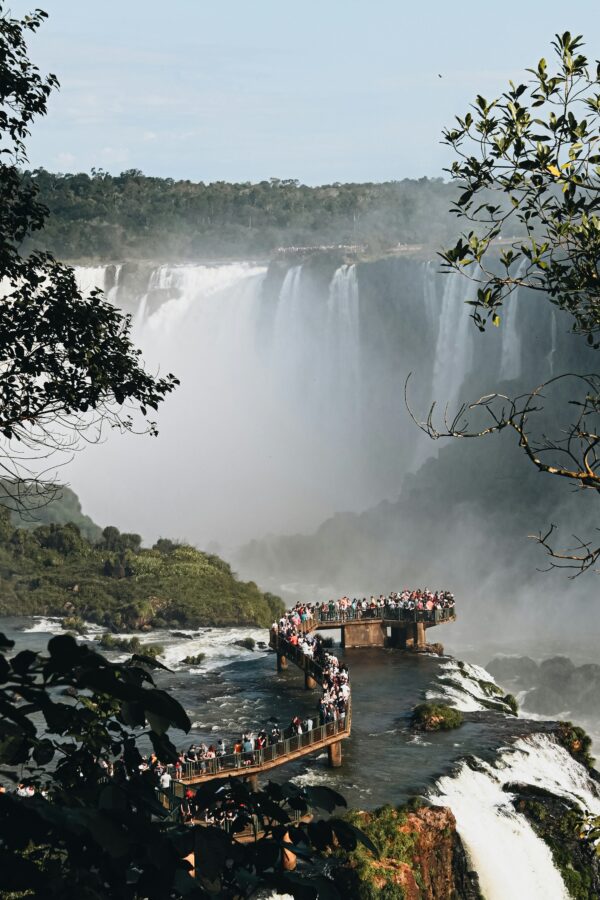
The most imposing cascade is the Garganta del Diablo (Devil’s Throat), situated on the river’s main channel. Strictly speaking, the waterfall that gives birth to the Throat is the Unión fall, resting precisely on the border line between Brazil and Argentina. It drops a staggering 260 feet, throwing up a mist cloud visible from more than 4 miles away. Other significant falls include Álvar Núñez, Dos Hermanas (which features a natural pool 26 feet deep), Bosetti, and Chico Alférez, breaking in two distinct tiers. Further up, along the Upper Circuit, awaits the San Martín Fall—overwhelming and fiercely potent, it produces an eternal, deafening thunder in its double drop of over 230 feet.
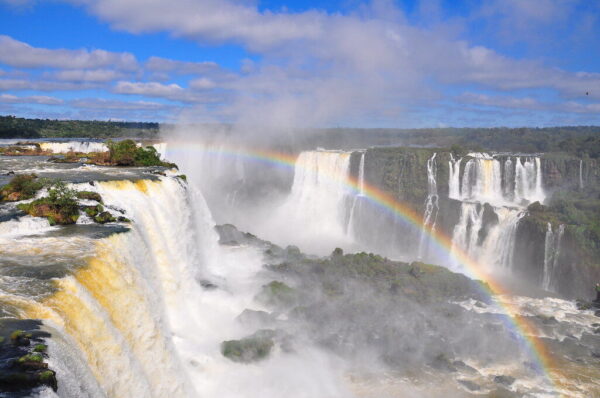
It is precisely within this dizzying liquid curtain that the emblematic great dusky swifts make their home. These fascinating, monogamous birds have the daring habit of nesting directly behind the roaring falls. They routinely dart through the ferocious wall of water at breakneck speeds to seek shelter—a hypnotic dance of survival that captivates any traveler who pauses to watch, listening to their sharp calls blend seamlessly with the crashing water.
The perpetual plunge of the river causes the formation of a thick mist across the entire gorge, which, when pierced by the sun’s rays, conjures an infinity of rainbows—one of the absolute classic postcard views of the area.
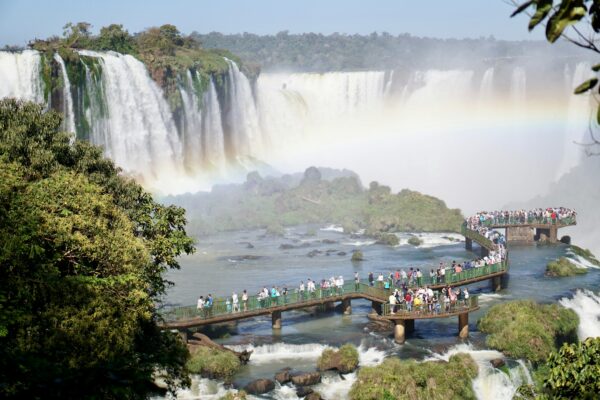
The entire waterfall system spans a width of approximately 1.7 miles, which, coupled with its towering height and the sheer volume of water during the rainy season, firmly places it among the largest in the world. To put it in perspective, it is nearly four times wider than Niagara Falls.
Visiting this corner of the South American map is not merely crossing another destination off your travel bucket list. It is an act of surrender to the immensity of a living, breathing planet that roars—reminding us, with every single drop suspended in the air, of our smallness in the face of such untamed beauty. It is a spectacle that undoubtedly changes anyone fortunate enough to behold it.