

A creature that looks like a cross between a hare, a rabbit, a small deer, and a kangaroo
Don’t worry—your eyes aren’t playing tricks on you. You’ve just met the Patagonian Mara. It’s one of nature’s best “optical illusions.”
While the Patagonian Mara looks like someone took a rabbit and stretched its legs out to look like a small deer, it is actually a rodent. Specifically, it’s one of the largest rodents in the world, closely related to guinea pigs and capybaras.
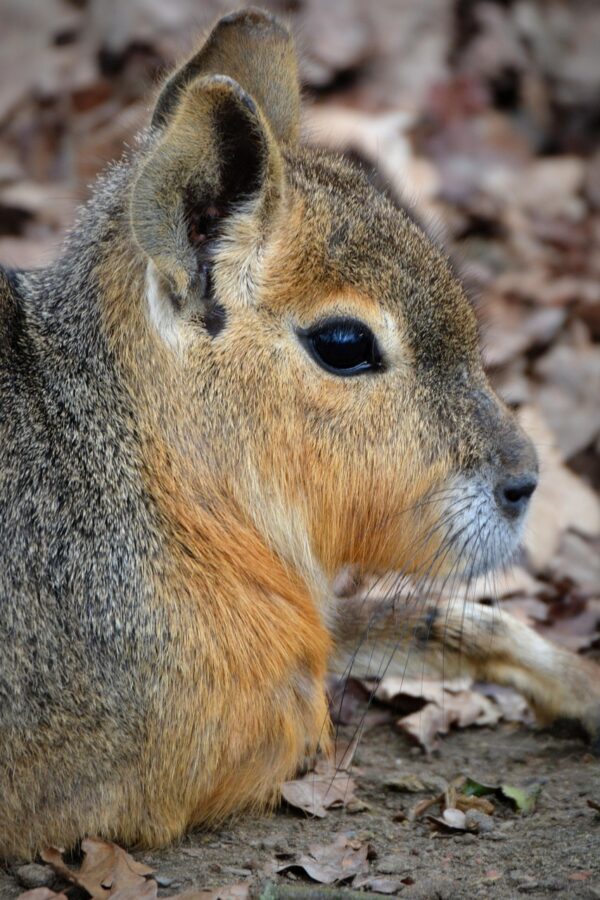
How does a rodent end up looking like a long-legged rabbit? The answer lies in a fascinating concept called convergent evolution.
Think of it as nature’s way of finding the same solution to the same problem twice. Both the European hare and the Patagonian Mara live in wide-open grasslands with very few places to hide. To survive a neighborhood filled with pumas and foxes, you need two things: incredible hearing and the ability to sprint at a moment’s notice.
Over millions of years, the Mara evolved long, powerful hind legs and oversized ears—traits nearly identical to the hare—simply because those were the best tools for the job.
The “Not-a-Hare” Checklist
While the silhouette might fool you from a distance, a closer look reveals the Mara’s true rodent roots. Here is how they stack up against the animals they are so often confused with:
| Feature | Patagonian Mara | Brown Hare |
| Scientific Order | Rodentia (Rodent) | Lagomorpha (Lagomorph) |
| Family Tree | Closely related to Guinea Pigs | Closely related to Rabbits |
| The Feet | Hoof-like claws for dry soil | Soft, furry paws |
| The Gait | Often walks or “stots” (jumps) | Primarily hops or runs |
Social Life on the Steppe
Beyond its looks, the Mara is a bit of an outlier in the animal kingdom due to its “family values.”
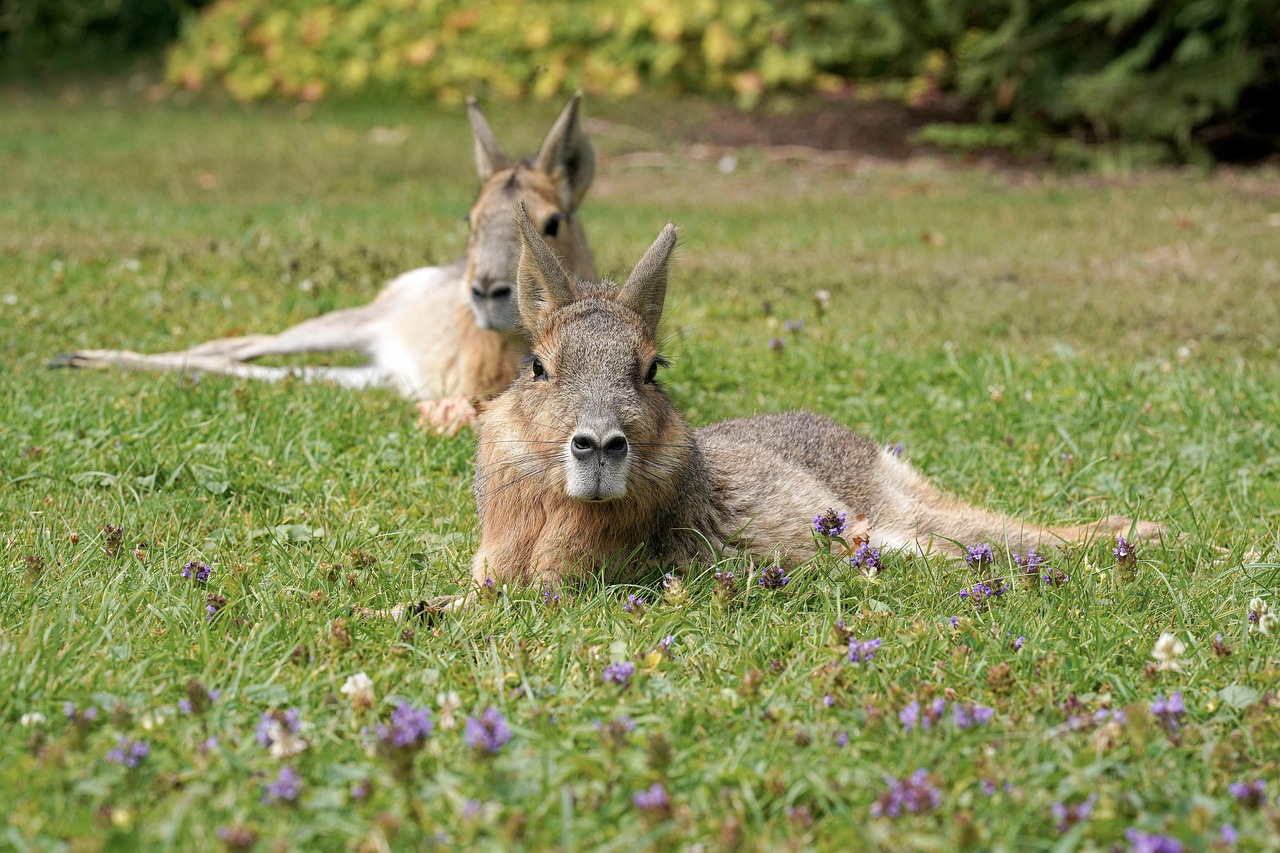
Strictly Monogamous: While many rodents are… let’s say “socially flexible,” Maras are strictly monogamous. They pair up for life. You will almost always see them in pairs, with the male acting as a bodyguard, standing watch while the female grazes.
Communal Daycares: Despite being devoted couples, they are surprisingly good neighbors. Several pairs will often share a single large “reproduction den.” While the pups hang out together in a giant underground nursery, the mothers are experts at sniffing out their own offspring to ensure they only feed their own.
Built for Speed: If a predator does show up, the Mara doesn’t just run; it performs a move called “stotting”—bouncing on all four limbs at once. It’s a high-speed display of fitness that tells a predator, “Don’t even bother chasing me; I’ve got energy to burn.”
Next time you’re leafing through a travel guide or trekking through the south of Argentina, keep an eye out for these “stilt-rabbits.” They are a quirky, beautiful reminder that in Patagonia, things are rarely exactly what they seem at first glance.