


The colonization contrast between the Americas deeply shaped Patagonia’s territorial layout.
While the Anglo-Saxon expansion in North America was built on a rural colonization model that constantly pushed the frontier for agricultural settlement, the Spanish colonial administration prioritized a bureaucratic setup based on founding isolated urban hubs. This design, intended for administrative and tax control rather than for the productive integration of the inland areas, left immense geographies marginalized and irreversibly defined Argentina’s demographic matrix, concentrating the population around the ports.
With the consolidation of the National State in the mid 19th century, that vast uninhabited southern expanse called Patagonia ceased to be a blurred frontier and became a geopolitical imperative. Incorporating it into the agro-export model required ensuring effective sovereignty and a workforce to exploit its resources. Under the Alberdi paradigm that “to govern is to populate,” official policies focused on attracting contingents of immigrants—preferably European—with the promise of civilizing and integrating these lands into the global market.
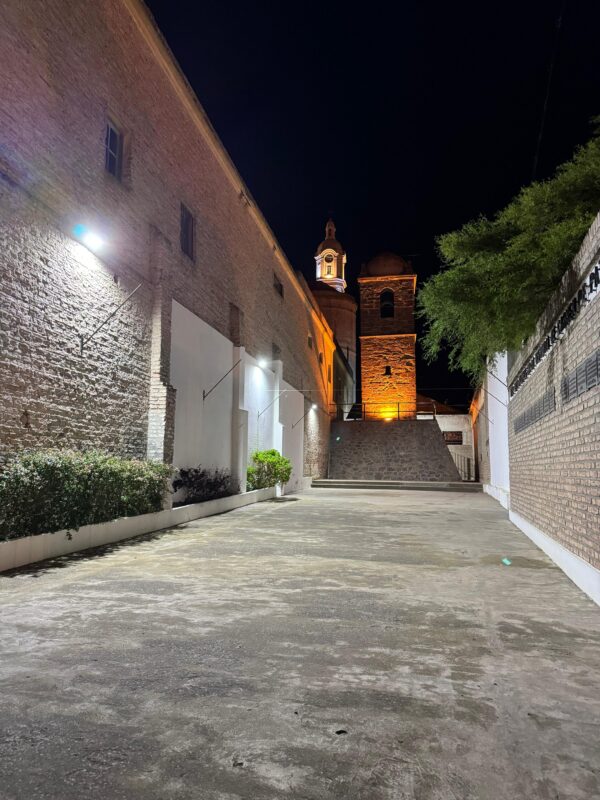
In the Patagonian territory, this state project led to a cultural mosaic molded by specific economic niches. The northern Andean Patagonian region absorbed the influence of Swiss and German settlers, a charm you can still experience today in places like Bariloche; the immense steppe of Santa Cruz was divided into gigantic sheep-farming estates, like the iconic traditional estancias scattered across the plateau, managed by English and Scottish capital, while the Chubut River valley served as an identity haven for Welsh pioneers. At the same time, the construction of irrigation canals in the Río Negro valley allowed Italian and Spanish immigrants to transform an arid environment into an outstanding fruit-growing hub, making cities like General Roca famous for their apples and pears.
However, the region’s definitive and most massive demographic shift did not cross the Atlantic. During the second half of the 20th century, the driver of settlement mutated from agricultural colonization to energy exploitation and industrial promotion. This triggered an unprecedented wave of internal migration. Men and women from various Argentine provinces settled in the south, sheltered by the incipient oil industry, hydroelectric projects, and tax benefits. This caused accelerated population booms, consolidating Patagonian cities as the fastest-growing in the entire country.
 But despite these migratory waves, connecting this vast territory remains an unfinished business. On a macroscopic scale, Patagonia exposes one of Argentina’s greatest paradoxes: persisting as one of the regions with the lowest population density on the planet, contrasting its abysmal demographic void with high literacy rates, strong urbanization, and a human development index that exceeds the national average.
In this scenario, contemporary Patagonia is no longer defined simply as a vacant geography waiting to be conquered, but as a territory traversed by the tension between its historical role as a raw material provider and the aspiration for self-sufficient local development.
The real challenge of the 21st century is no longer the simple occupation of physical space. The current urgency lies in overcoming the enclave economy model, demanding a diversified productive matrix and a connectivity infrastructure that can transform its historic remoteness into a network of integrated and sustainable communities.