In this article by Jorge Impellizzeri you’ll learn about the best wine production areas in Patagonia and the special characteristics of their wines due to the particular climate of the region. As you get familiar with the names of many of the best wine varieties grown in the area, you’ll get ready for one – or more – tasting days on your next trip to these lands.
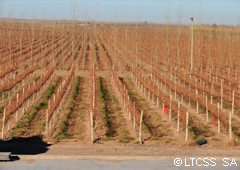
Known as the cold region wines, the types of wines produced in the Patagonia Valleys have a high quality and considerable fame in Argentina. Many of them are exported to some of the most demanding markets around the world.
The area’s wine production is centered around the valleys of Rio Negro and Rio Colorado. The climate, cold rainy winters and hot dry summers, as well as the great day/night temperature differences together with a lot of sunshine, provide the ideal conditions for the production of high acidity, thus very fresh, wines. The length of the frost-free season is particularly good for short term growing wine types.
The Upper Valley of Rio Negro, which comprises the districts of Confluencia  in the province of Neuquen, and General Roca in Rio Negro, concentrates 80% of the regional wine-cultivated area. The grape types best adapted to the natural conditions of the area are: among the whites, Torrontés Riojano, Pedro Gimenez, Semillón, Torrontés Sanjuanino, Sauvignon, Torrontés Mendocino and Chenin; and among reds, Malbec, Merlot, Syrah, Pinot Noir, Cabernet Sauvignon and Bonarda. There’s also a very important production of sparkling wines. A considerable number of wineries produce wines to be exported, mainly to North American and European markets.
The Middle and Low Valleys of Rio Negro are also good growing areas. Climate conditions change towards the East, due to the increase in rainfall. The types best adapted to the area are reds Malbec, Merlot, Tempranilla, Cabernet Sauvignon, Pinot Noir and whites Torrontes Riojano, Torrontes Sanjuanino, Semillón and Pedro Gimenez.
Other important wine areas in Patagonia are the Upper and Middle  Valleys of the Colorado river. The Upper Valley comprises approximately 125 hectares where the main types grown are Malbec, Merlot, Semillón, Pinot Joubertin and Torrontés Mendocino – also known as “loca blanca” (crazy white) . The Middle Valley of the Colorado River, in the district of Pichi Mahuida, Rio Negro, produces Semillón, Torrontés Mendocino, Bonarda and Malbec among
others, all of which are used for vinification. Worth mentioning is the production of two wine types which are exclusive of this area: Pedro Gimenez Rio Colorado and Sauvignon Rio Colorado; both of them have a good yield and excellent quality.
Since the Controlled Name of Origin (CNO) law was passed, two regions have deserved such qualification, namely, Luján de Cuyo and San Rafael  (in the province of Mendoza). The Upper Valley is about to become the third Argentine region to comply with this law. In the Enological Study Center from the National Institute of Agricultural Technology (INTA) studies have been performed to assess the enological quality of a number of grapevines from different areas as a basis for future names of origin. The CNO is granted only to superb wines produced under special conditions using high quality grapes, in accordance with norms and specifications exclusive of certain geographical areas. The Upper Valley possesses the natural and production characteristics to deserve such an award.
Article by Jorge Impellizzeri